
Skip to product information
1 of 5

Nordic Tests ApS

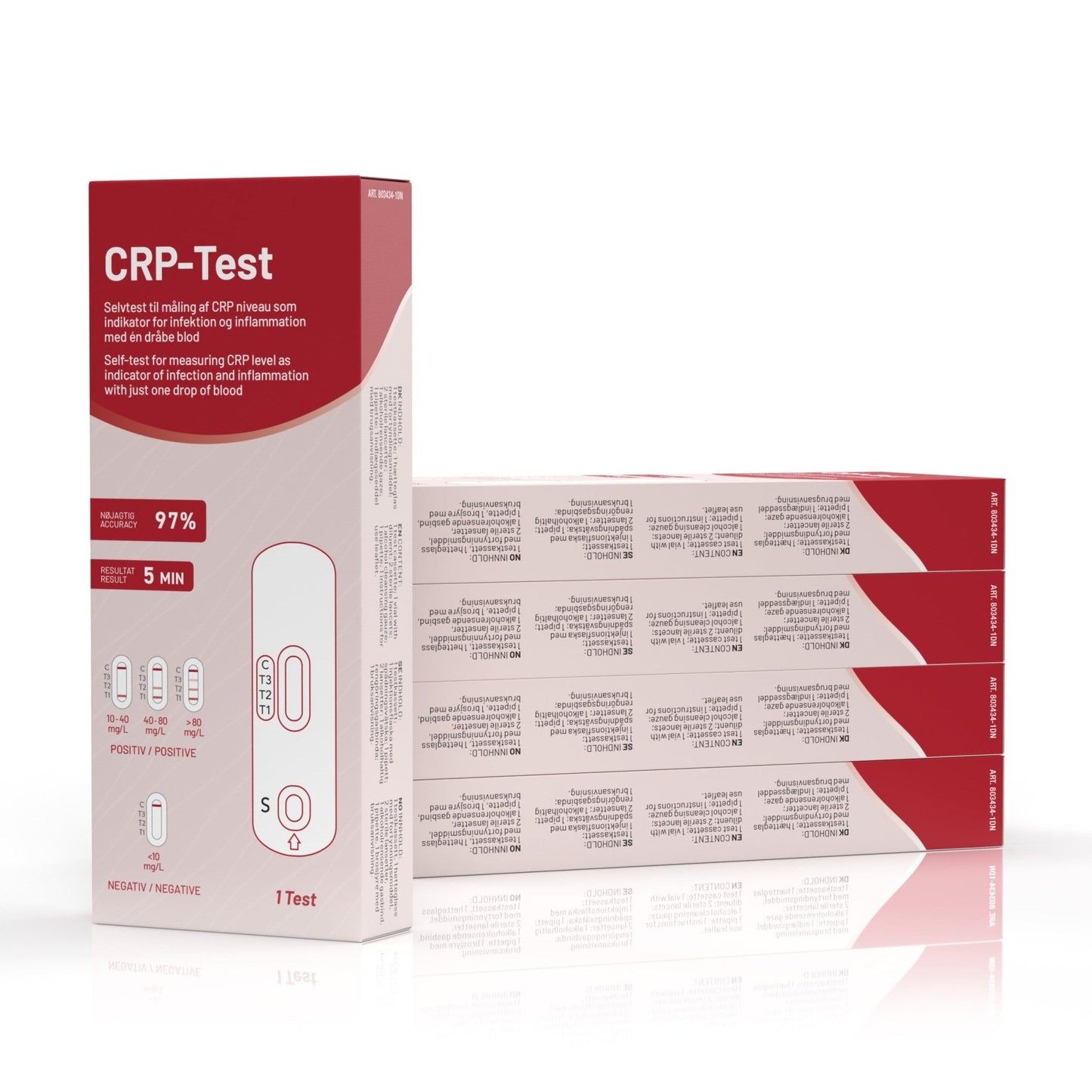
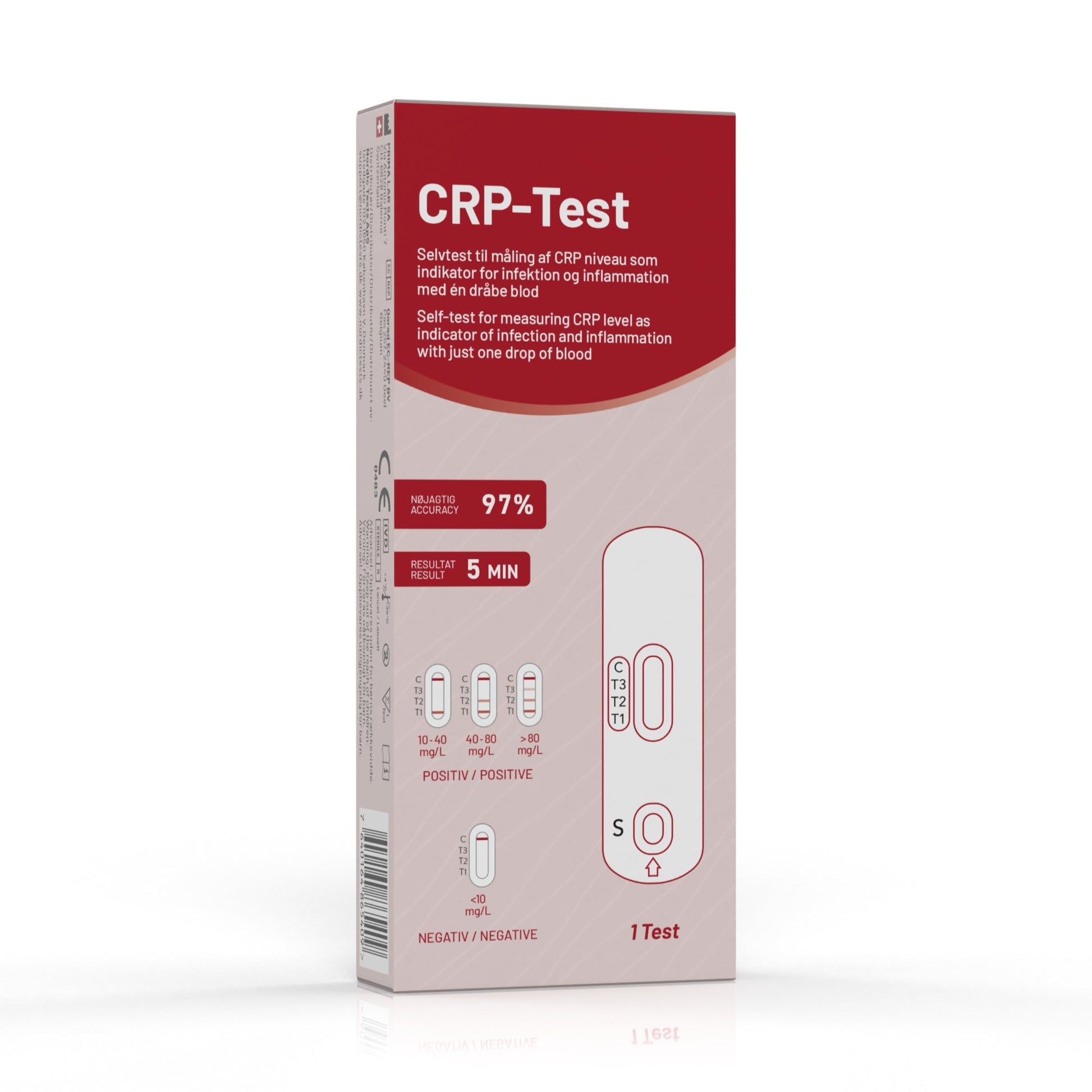
CRP Test | Screening test for infection and inflammation

CRP Test | Screening test for infection and inflammation

Regular price 149,00 DKK
Regular price 179,00 DKK Sale price 149,00 DKK
Sale Sold out
Taxes included. Shipping calculated at checkout.

In stock

  • Anmeldt fremragende på Trustpilot

Gain insight into your infection level with a CRP test

  • Result in 10 minutes
  • Measures CRP levels – semi-quantitative result
  • CE-godkendt selvtest
View full details

CRP Test: Content, Guide and General Information

Instructions

Information

This CRP test helps check your level of C-reactive protein (CRP). CRP is a substance the body makes when there is inflammation that can occur by infection or injury.

If you have a mild infection or inflammation, your CRP level will rise slightly. However, if you have a more serious infection or if you have a long-term illness, your CRP level may be higher and fluctuate with the disease activity.

A slightly elevated CRP level may indicate a variety of health challenges. If you find an elevated CRP level without a clear cause, it is important to get further studies to find out what is causing it.

Instructions for use

Guide to Infection Rate Test (CRP level)

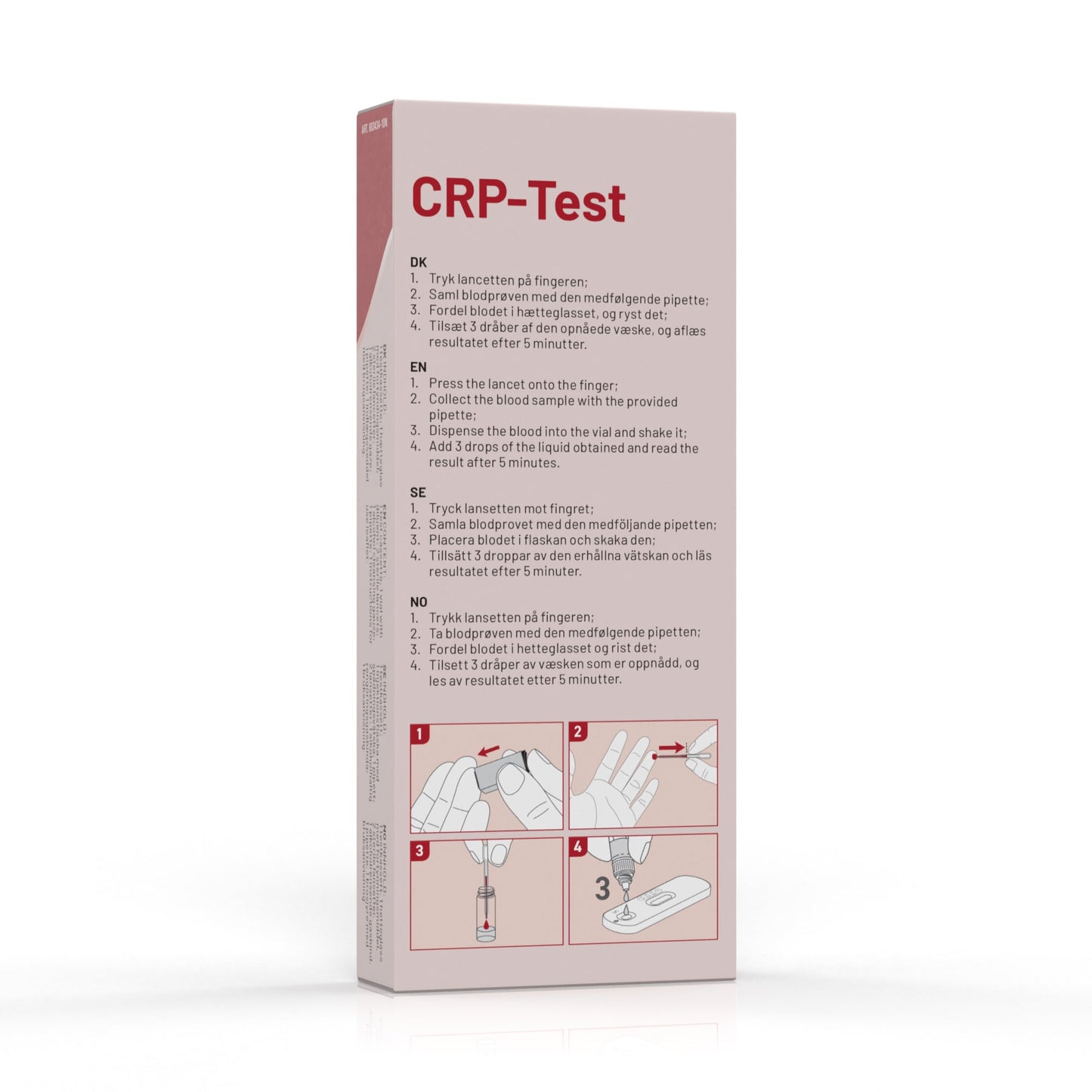
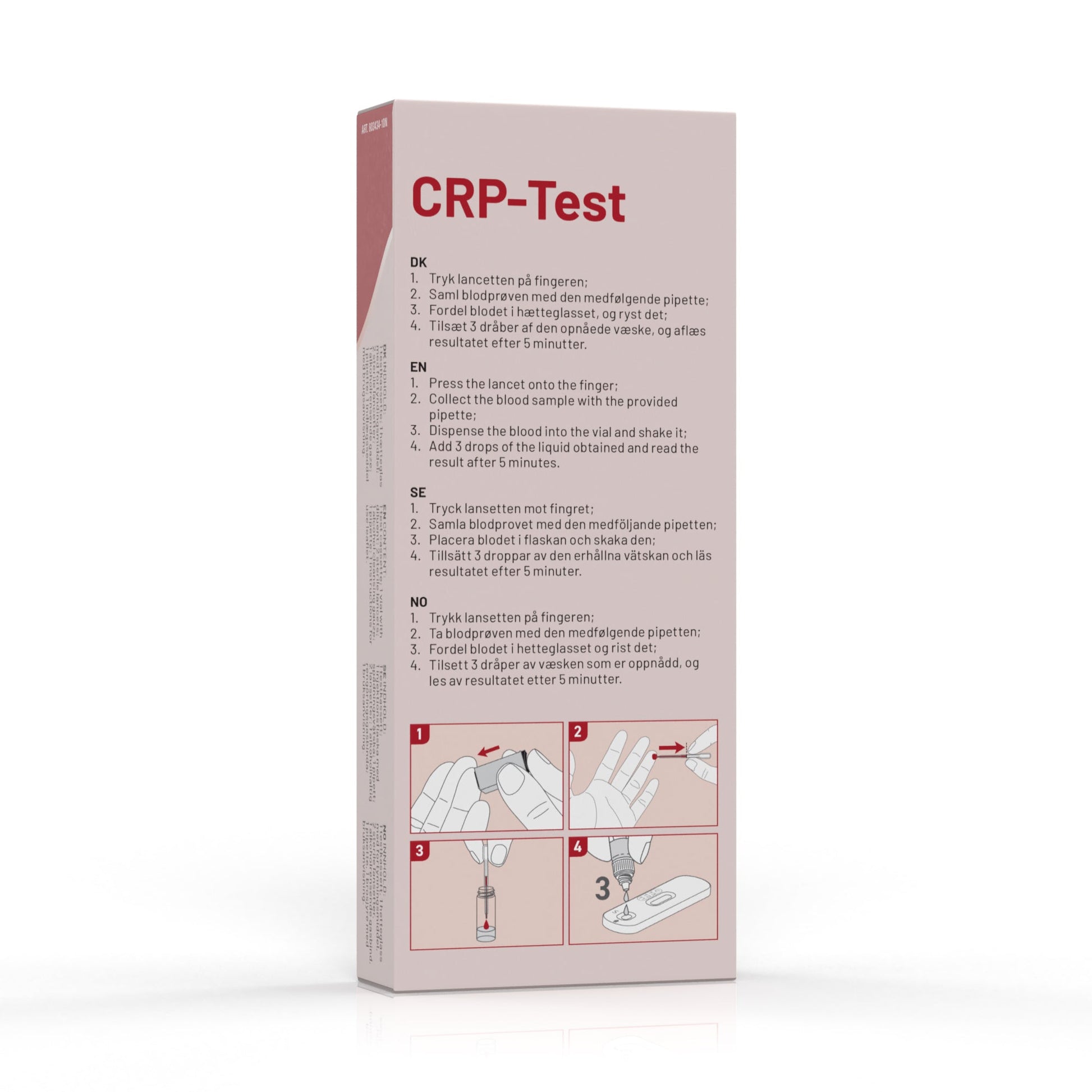
  1. Preparation:
    Wash your hands with soap and hot water, rinse them with clean water, and let them dry. Note: The use of hot water facilitates the collection of capillary blood as it causes vasodilation.
  2. Preparation of Material:
    Lay out the necessary material as follows:
  3. Prepare the lancet:
    Gently turn the sterile lancet's protective cap 360 ° without pulling it, then pull out the cap and toss it out. (Fig. B)
  4. Prepare your finger for blood test:
    Carefully massage the finger chosen (it is recommended to use the side of the ring finger). It is important to massage from the palm to the fingertip to improve blood flow. Press the open end of the lancet (the side where the cap has been pulled out) towards the tip of the finger. (Fig. C) The tip of the lancet is automatically withdrawn after use. If the lancet does not work properly, discard it and use the other included lancet. If the other lancet is not needed, it can be disposed of without special precautions.
  5. Collection of blood:
    Hold your hand down and massage your finger until a large drop of blood forms. It is important to massage from the palm to the fingertip to improve blood flow. (Fig. D.)
  6. Collection with the pipette:
    Take the pipette without pressing the bulb. There are two sampling methods:
  7. Transferring blood to the Dilution Resolution:
    Put the blood collected with the pipette in the previously opened bottle. Press 2-3 times on Pipette's bubble to make sure all the blood is moved into the dilution solution. Set the screw lid on the vial and mix well for at least 10 seconds. (Fig. F)
  8. Preparing the Test Cassette:
    Screw the blue hood off the drip bottle (let the white hood be firmly stuck). (Fig. G)
    Pour 3 drops into the well shown on the cassette (s). (Fig. H.)
  9. Reading results:
    Wait 5 minutes, and then read the results as indicated.

Return and reimbursement policy

By invalid response or defective test, please contact our support department at support@infektionstest.dk

- Used/opened items not returned

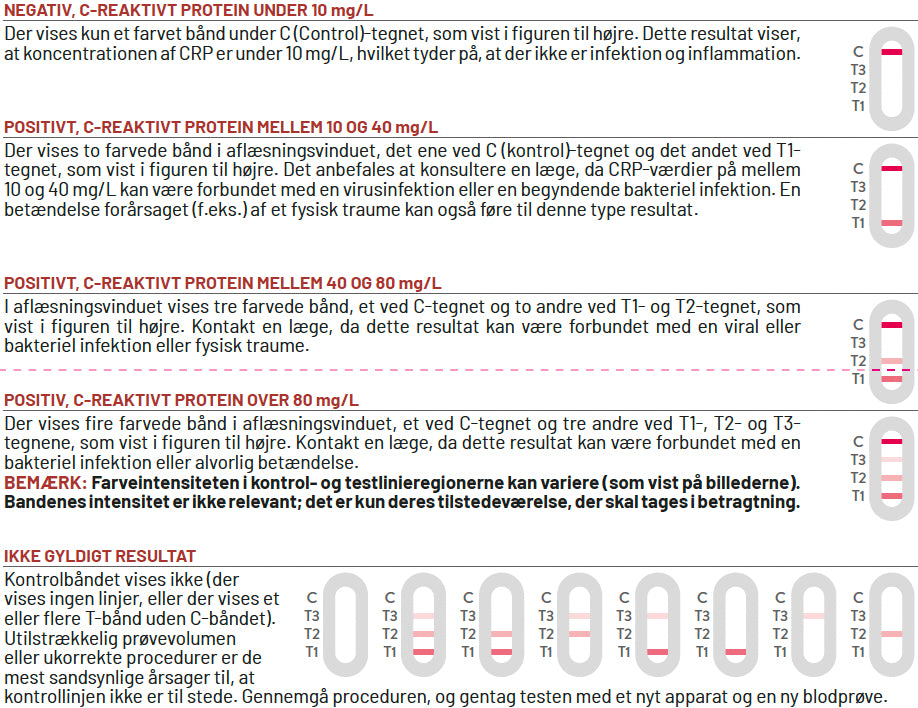
How to read the result

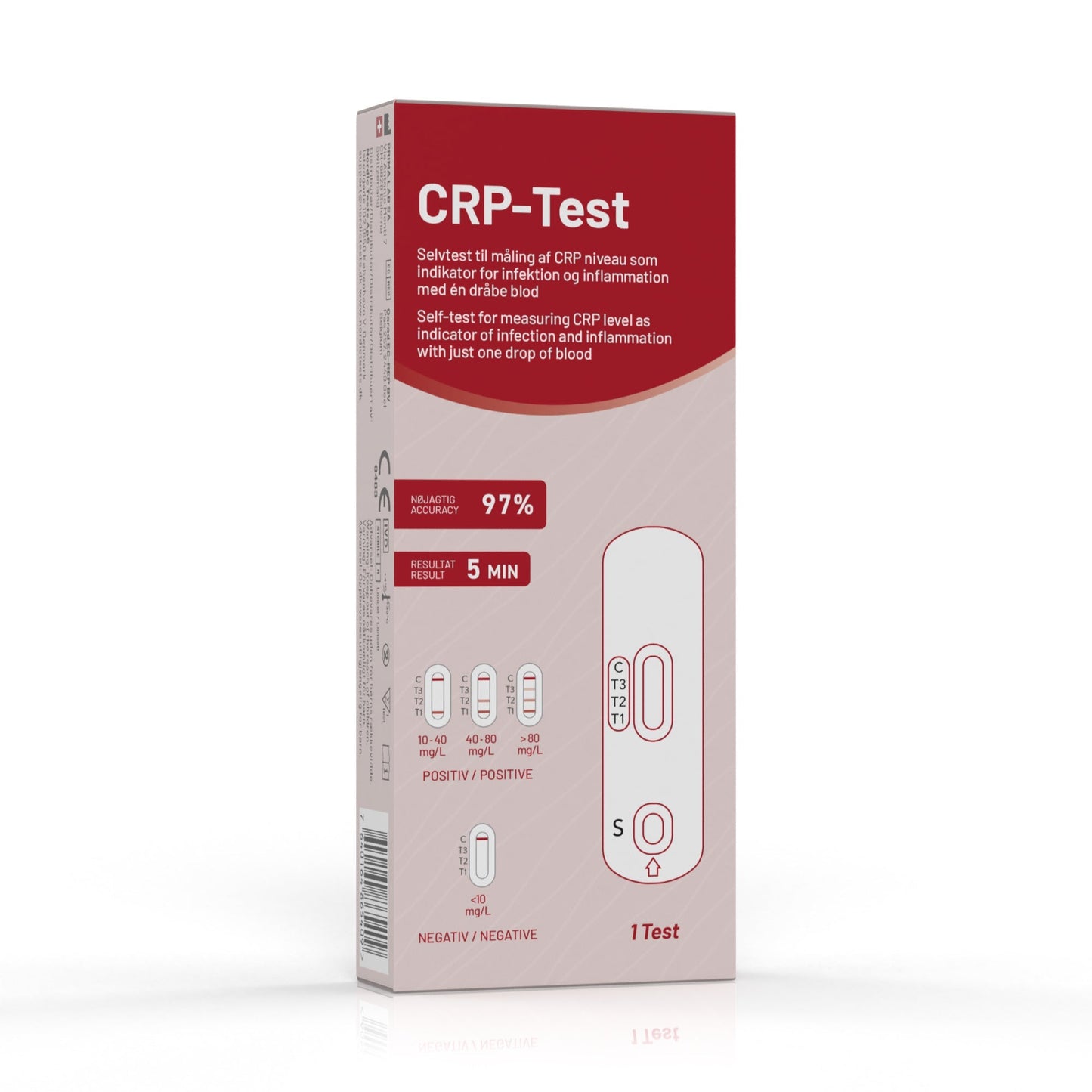
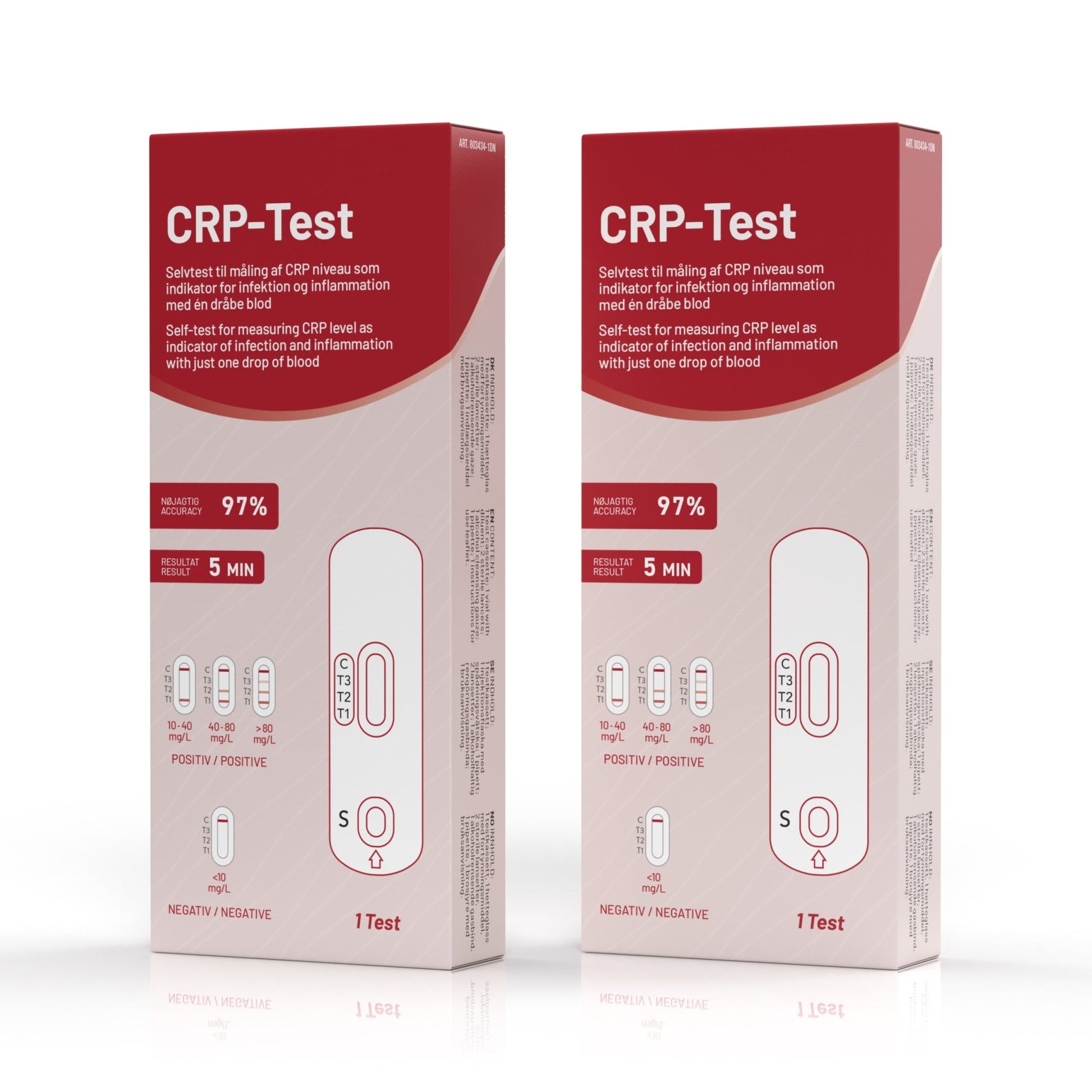
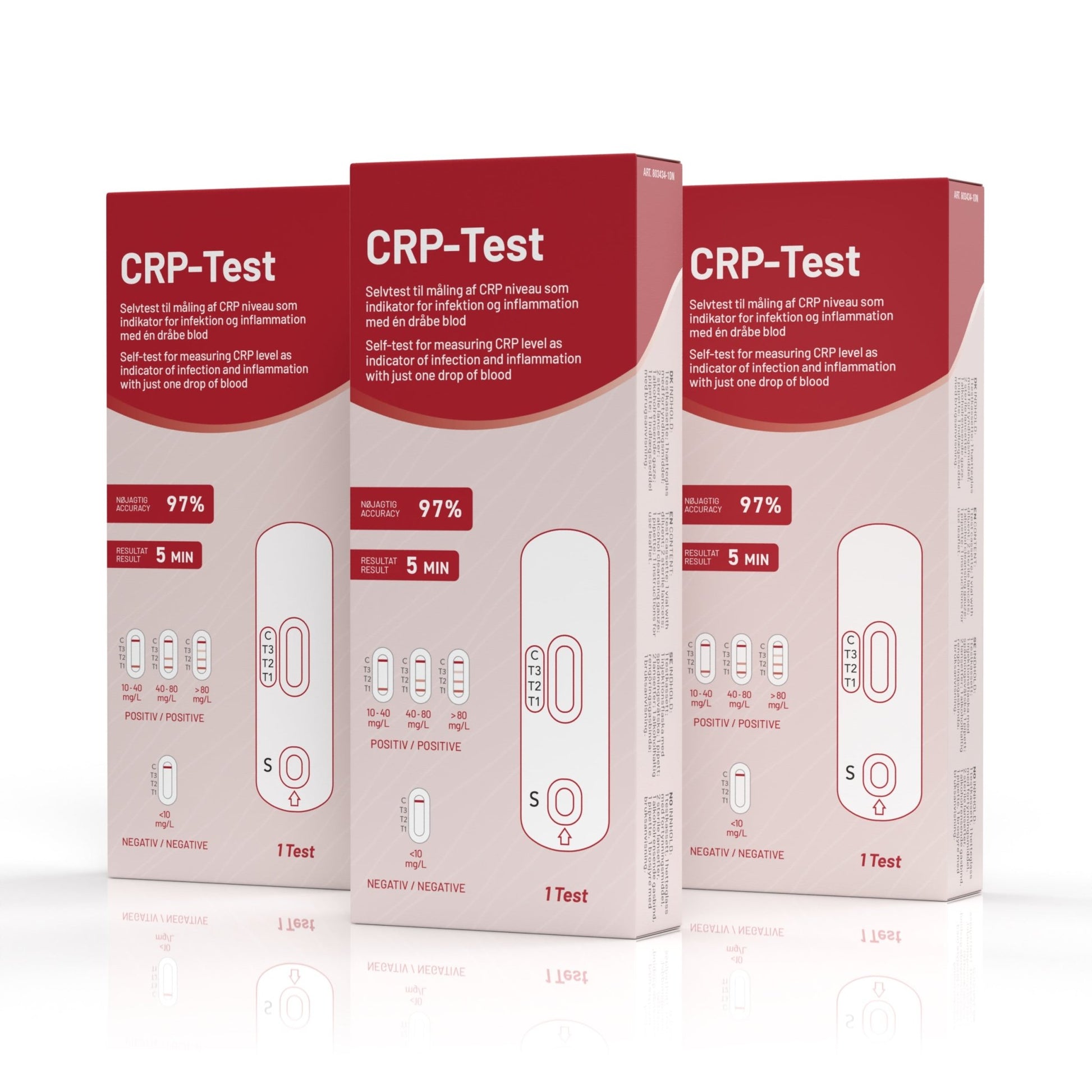
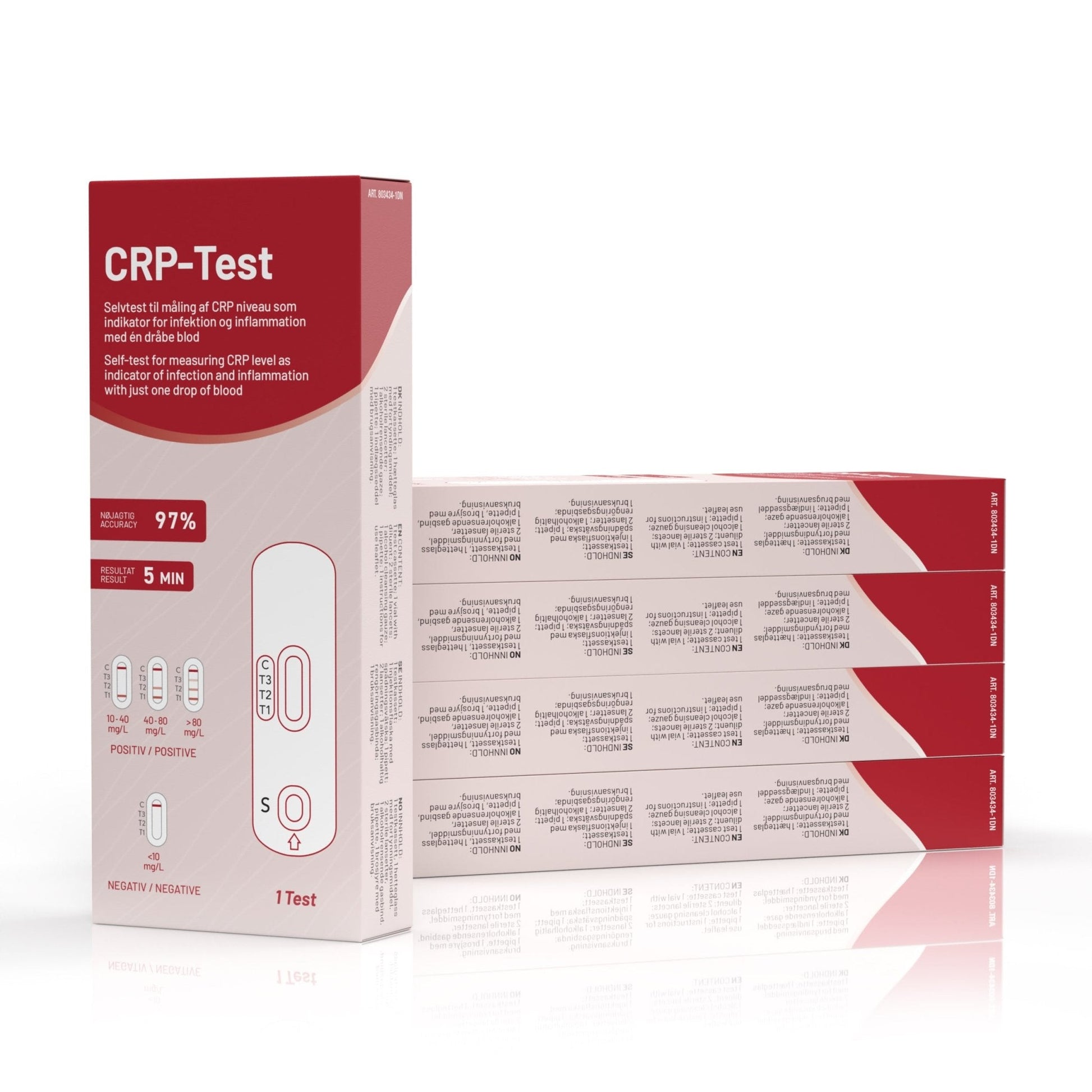
Negative, C-reactive protein below 10 mg/l
Only one colored band is displayed under C (Control) sign. This result shows that the concentration of CRP is below 10 mg/l, suggesting that there is no infection or inflammation.

Positive, C-reactive protein between 10 and 40 mg/l
Two colored ribbons appear in the reading window: one by C (control) sign and one by the T1 sign. It is recommended to consult a doctor as CRP values ​​between 10 and 40 mg/l may be associated with a viral infection or a beginning bacterial infection. An inflammation caused by, for example, a physical trauma can also lead to this type of result.

Positive, C-reactive protein between 40 and 80 mg/l
In the reading window, three colored ribbons are displayed: one at the C character and two at the T1 and T2 characters. Contact a doctor as this result may be associated with a viral or bacterial infection or physical trauma.

Positive, C-reactive protein over 80 mg/l
Four colored ribbons appear in the reading window: one at the C drawn and three at T1, T2 and T3 characters. Contact a doctor as this result may be associated with a bacterial infection or severe inflammation.

Note:
The color intensity of the control and test lines regions may vary (as shown in the images). The intensity of the gangs is not relevant; Only their presence must be taken into account.

Not valid result
The control band does not appear (no lines appear or one or more T-bands are displayed without the C band). Insufficient sample volume or incorrect procedures are the most likely reasons why the control line is not present. Review the procedure and repeat the test with a new appliance and a new blood test.

CRP test for infection markers – Get results in 10 minutes

With a CRP test, you can easily and effectively measure your CRP level to gain insight into whether you may have an infection or inflammatory condition in the body. This test has high sensitivity and specificity, so you can quickly get a reliable result.

What is a CRP test used for?

The amount of CRP increases in response to an infection, whether caused by a virus or bacteria. If you want to know your CRP level, a CRP test is an easy way to gain insight into your body’s condition.

It is also a frequently used and reliable marker that often determines the need for antibiotic treatment.

What does a CRP test tell you about infection markers?

With a CRP test for infection markers, you can measure the level of C-reactive protein in the blood. In this way, you can detect inflammatory conditions in your body, which appear as elevated infection markers. This applies to infections in the body caused by either a virus or bacteria. It is therefore a good way to check for illness, where a CRP test for infection markers will show a positive result if you have inflammation in the body. In inflammation caused by bacteria, high values between 40 mg/L and over 200 mg/L can be seen. In viral infections, it rarely exceeds 20 mg/L. Without an inflammatory condition in the body, your values are usually between 8–10 mg/L. Your test may show a positive result without it necessarily being something serious. If you measure a value above 200 mg/L, there may be a severe inflammation, and you should therefore see a doctor.

When you visit a doctor with symptoms such as fever or a sore throat, they will often check your infection markers, as this can be a good indicator of whether you have tonsillitis or another type of inflammatory condition.

Nordic Tests helps you

Our CRP test is a CE-approved self-test.

Our tests are easy to use and deliver accurate results within minutes, without the need to wait several days for answers.

A slightly elevated concentration of CRP may indicate various health challenges. If you detect an increase in CRP without a clear cause, it is essential to carry out further investigations to identify the cause more precisely.

Get answers at home – quickly and easily with Nordic Tests

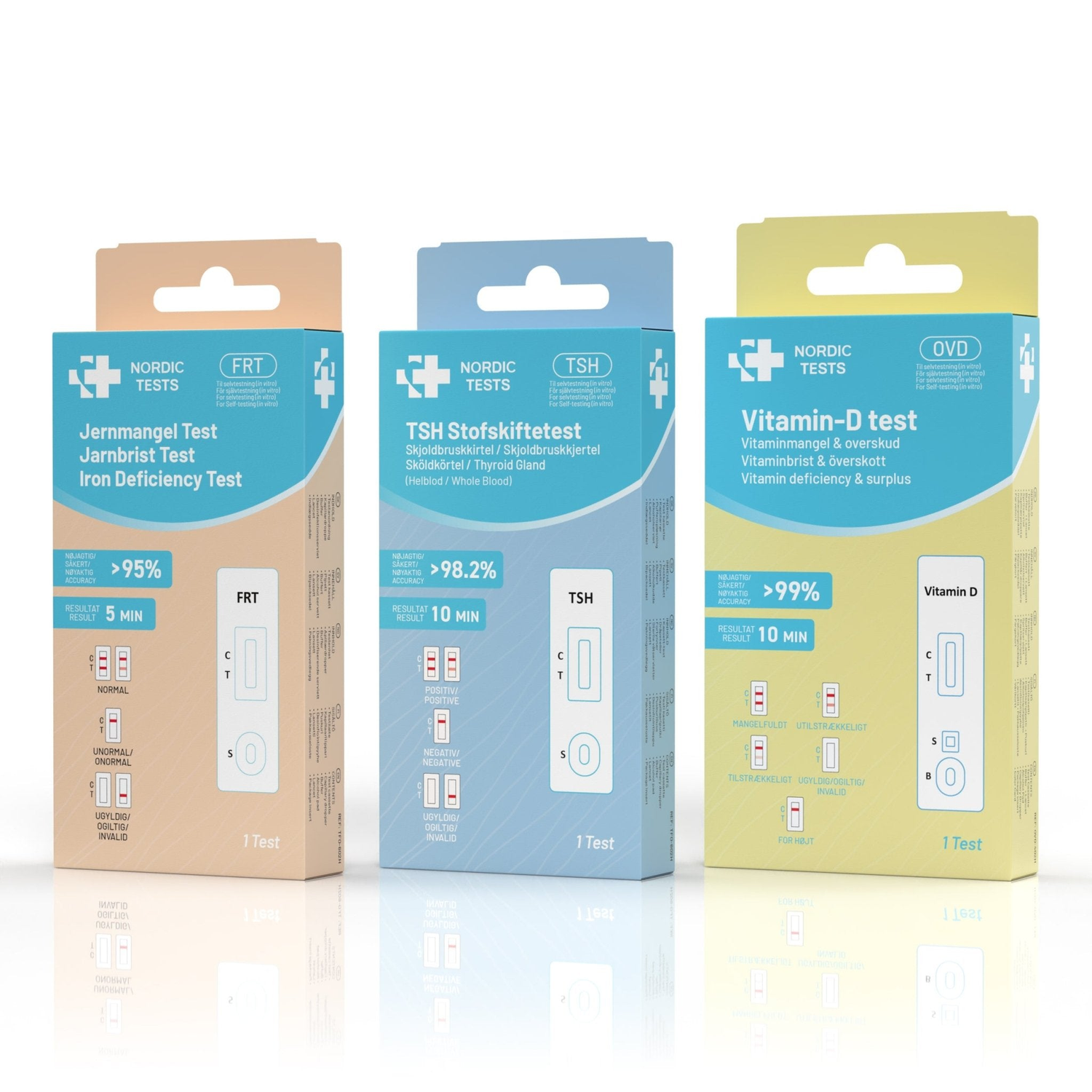
In addition to our CRP test, you can order self- and home tests such as a thyroid test and a menopause test.

Infection figures Test FAQ

Frequently asked questions

How is infection figures tested?

“Infection markers” is a general term for blood tests that measure the body’s response to infection, typically CRP, white blood cell count and procalcitonin. With an infection marker test, the doctor can assess whether there is a bacterial or viral infection and how extensive it is. If the values are elevated, this may indicate inflammation or infection, while normal values point to a low level of inflammation.

Infection markers and CRP tests are therefore an important part of diagnosing and treating disease, especially when you experience symptoms such as fever, fatigue or persistent malaise. Regular measurements of infection markers can also help monitor the effect of treatment and ensure that the infection is under control.

What is too high infection rate?

“High infection markers” refers to CRP, white blood cell count or procalcitonin values that are above the normal reference ranges.

For example, a CRP above 10 mg/L is often considered a sign of increased inflammation, while a white blood cell count above about 10 billion/L or an elevated procalcitonin level can also indicate an active infection.

However, the thresholds may vary between laboratories and depend on your overall health.

What is CRP?

CRP is an acute-phase protein produced by the liver during inflammation. An elevated CRP level may indicate an ongoing infection (often bacterial) or another form of tissue inflammation. CRP can also rise in response to tissue damage, autoimmune diseases, and after major surgery, which is why it does not determine the diagnosis on its own but is used as a guiding signal that something is wrong.

How does the CRP test work?

The test detects the presence of CRP in human whole blood samples using specific antibodies and colloidal gold embedded in the test strip.

When can the test be used?

The CRP test can be used in cases of infection or inflammatory symptoms such as fever, headache or weakness, or to monitor the healing process after surgery and minor injuries.

The test can also be used to monitor the effectiveness of treatment and can be performed at any time of the day.

Can the CRP test result be wrong?

The result is correct as long as the instructions are followed properly and the test is stored under the conditions specified in the instructions for use.

The result may be incorrect if the test comes into contact with other liquids before use, or if the amount of blood or buffer solution is insufficient.

If the number of drops dispensed into the well is incorrect, or if the reading times are not followed precisely, the CRP test result may also be incorrect.

The included plastic pipette makes it easy for you to ensure that you collect the correct amount of blood.

May I read the result after 6 minutes?

No. The test must be read 5 minutes after the procedure is completed, and no later than 6 minutes after that time. Results read after 6 minutes may not be correct.

What should I do if the CRP level is high?

If the result is positive and CRP is higher than 10 mg/L, you should see the section “Interpretation of the result” and contact your doctor as soon as possible, as further investigation and antibiotic treatment may be necessary.

What should I do if the CRP level is low?

A negative result means that the concentration of CRP is low and below the cut-off value of 10 mg/L. This means that there is no ongoing viral or bacterial infection. If your symptoms persist, you should see a doctor.

How accurate is the CRP test?

The CRP test has a high agreement with analytical reference methods, with 97% accuracy in distinguishing between normal (<10 mg/L) and abnormal values.