

Chlamydia infection figures 2025: New SSI data show the current situation
Chlamydia infection figures 2025 show that chlamydia remains one of the most widespread sexually transmitted infections in Denmark – especially among young people. According to Statens Serum Institut’s EPI-NYT, 29,950 laboratory-confirmed chlamydia cases were registered in 2025.
The most interesting aspect of the new figures is not only how many people were diagnosed with chlamydia. It is also that the number of testing episodes fell by 6% from 2024 to 2025, while the number of confirmed cases was virtually unchanged. This means that fewer people were tested, but almost the same number of infections were found.
For you as a reader, the conclusion is simple: Chlamydia can still be difficult to detect without testing, and the latest figures indicate that regular testing continues to play an important role—especially if you have had unprotected sex, a new partner, or multiple partners.
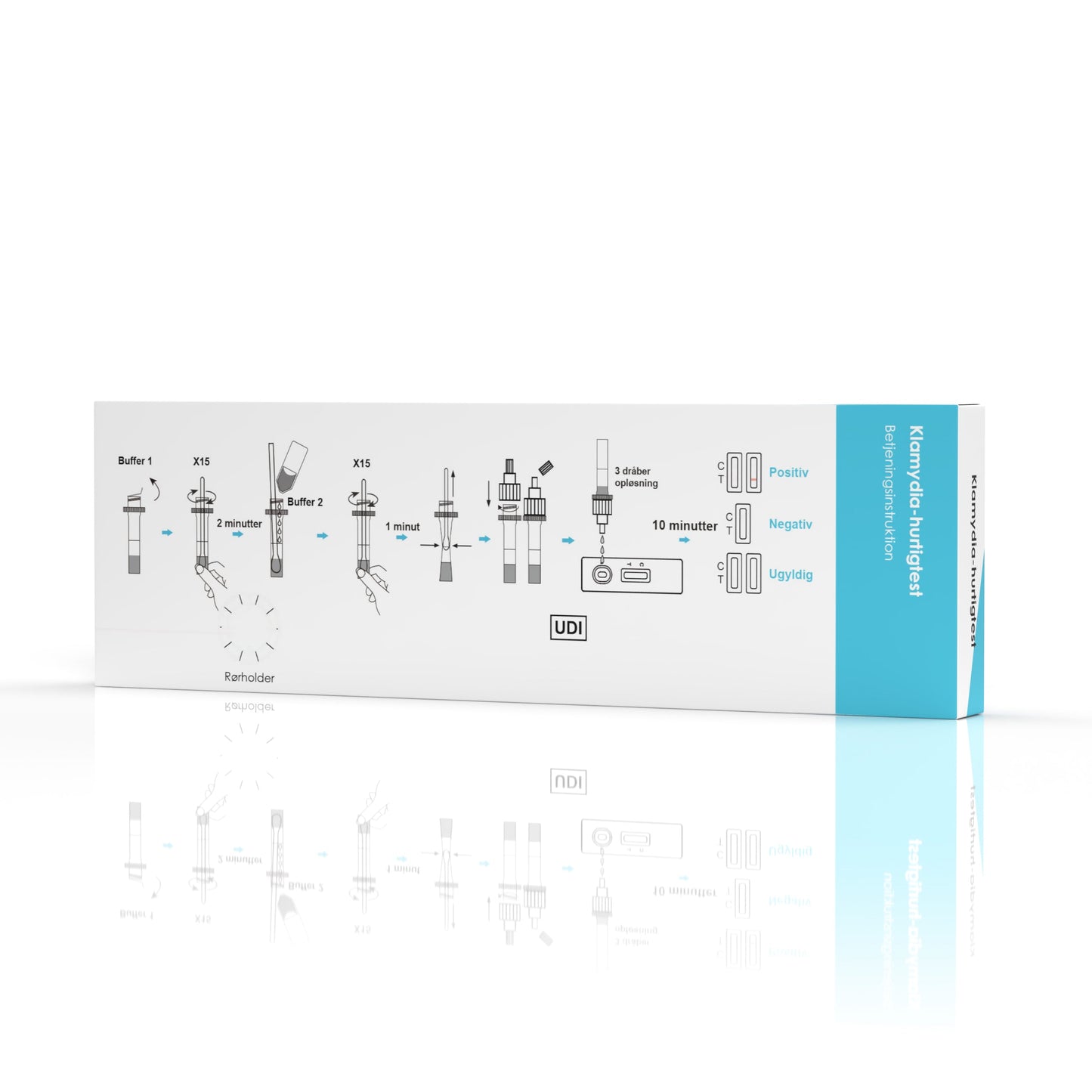
At Nordic Tests, you can browse our range of chlamydia self-tests and other tests for sexually transmitted infections if you want a discreet way to test yourself at home.
Chlamydia infection figures 2025: The key numbers
The new chlamydia infection figures for 2025 show several clear trends. First and foremost, the number of laboratory-confirmed cases was almost unchanged compared with 2024. In 2025, 29,950 cases were registered, while the number of testing episodes fell.
SSI’s detailed report shows that 266,561 people were tested for chlamydia in 2025, corresponding to 331,795 testing episodes. This underlines that chlamydia still takes up considerable space in the Danish healthcare system.
At the same time, the positivity rate is worth noting. The positivity rate was higher among men than among women. Men had a positivity rate of 12.7%, while women had a positivity rate of 7.2%. This means that a larger proportion of the men who were tested were found to have chlamydia.
Chlamydia statistics 2025 show fewer tests, but the same level of infection
An important point in the 2025 chlamydia statistics is that fewer people were tested, without a corresponding drop in the number of confirmed cases. When testing activity decreases but the number of positive samples remains stable, it may indicate that many people are only being tested when the risk or suspicion is high.
This makes it even more important to pay attention to testing, even if you have no symptoms. Many people with chlamydia do not notice anything. As a result, the infection can be overlooked and passed on without the person being aware of it.
Chlamydia infection figures 2025 among young people
The new chlamydia infection figures for 2025 again show that young people are the most affected group. A full 82% of all detected chlamydia cases occurred in the 15–29 age group. This is unchanged from 2024.
This does not mean that other age groups cannot get chlamydia. But the figures clearly show that young adults still account for the largest share of detected cases. This is partly related to dating, new partners and sexual activity in a life phase where partner change is often more common.
For young people, it is therefore particularly important to have a low threshold for getting tested. This applies both after unprotected sex, after a change of partner, or if a previous partner tells you that they have tested positive.
Chlamydia infection figures 2025: Men are tested less than women
One of the most striking findings in the 2025 chlamydia infection figures concerns the difference between men and women. Men accounted for 45% of all detected chlamydia cases, but were tested to a much lesser extent than women.
In 2025, there were 3,470 testing episodes per 100,000 men compared with 7,491 testing episodes per 100,000 women. In other words, women were tested more than twice as often as men.
At the same time, the positivity rate was higher among men. This may indicate that men are more often tested when there are already symptoms, suspicion or a specific risk of infection. It is therefore important that men also become aware of testing as a preventive measure – not just as something you do when symptoms are obvious.
What does positivity rate mean in relation to chlamydia?
Positivity rate means the proportion of tests or testing episodes where the result is positive. If the positivity rate increases, it may mean that a larger share of those tested are actually infected.
In 2025, the overall positivity rate according to SSI was 8.9%. That is slightly higher than in 2024, but still lower than in 2022, when the positivity rate was 11.3%. However, for the most recent year, SSI describes only small changes in the occurrence of chlamydia.
For the individual person, the positivity rate does not allow you to assess your own risk precisely. It says something about trends at the population level. Your personal risk depends, among other things, on unprotected sex, number of partners, your partners’ infection status, and whether you have previously had a sexually transmitted infection.
Why are the new chlamydia infection figures important?
The new figures are important because they show that chlamydia remains widespread, even though the number of registered cases has fallen significantly since 2022. SSI writes that the number of detected chlamydia cases has fallen by 29% since 2022, but that there is no obvious explanation for the large decline in the period 2022–2024.
This means you should be cautious about interpreting the figures as if the problem has been solved. If fewer people are being tested, it can affect how many infections are detected. The new figures should therefore be seen as a status update—not as a reason to test less.
The best prevention is still safer sex, open communication with partners, testing when at risk, and partner notification if you are diagnosed with chlamydia.
Chlamydia treatment and the new recommendation
SSI also highlights chlamydia treatment in the new figures. Since 2019, doxycycline has been recommended as the first-line treatment for uncomplicated chlamydia in Denmark. The background includes concern about azithromycin resistance in Mycoplasma genitalium.
Nevertheless, data from the Prescription Registry show that azithromycin is still used to treat chlamydia in about 40% of cases. SSI considers that its use should be reduced further.
If you test positive for chlamydia, you must contact a doctor for correct treatment. Chlamydia is treated with prescription antibiotics, and you should follow your doctor’s instructions, inform relevant partners and avoid sex until treatment has been completed according to current recommendations.
When should you consider a chlamydia test?
You should consider a chlamydia test if you have had unprotected sex, have a new partner, have multiple partners, or have been informed that a partner has tested positive. You should also be tested if you experience burning when urinating, discharge, pelvic pain or pain in the testicles.
But absence of symptoms is not the same as absence of infection. Many cases are only detected because the person gets tested. That is why testing is important, even when you feel completely healthy.
A chlamydia home test can be a discreet solution if you want to test yourself in private. If the test is positive, you should always contact a doctor so you can receive the correct treatment and guidance.
Chlamydia infection figures 2025: Brief summary
The 2025 chlamydia infection figures show that the number of confirmed cases is almost unchanged from the previous year, even though testing activity has declined. Men are tested significantly less than women but have a higher positivity rate. At the same time, 82% of cases still occur among young people aged 15 to 29.
The new figures therefore indicate that testing, prevention and partner notification are still important. Chlamydia can be asymptomatic, but untreated infection can cause complications and be passed on to others.
Source: The figures in this article are based on Statens Serum Institut’s EPI-NYT on chlamydia 2025 and SSI’s detailed statistics on disease occurrence.
FAQ on chlamydia infection figures 2025
How many people had chlamydia in Denmark in 2025?
According to Statens Serum Institut’s EPI-NYT, 29,950 laboratory-confirmed cases of chlamydia were registered in Denmark in 2025. The number was virtually unchanged from 2024, even though the number of testing episodes fell by 6%. This is why testing activity is an important factor when interpreting the figures.
Which age group has the most chlamydia cases?
The 15–29 age group still accounts for the vast majority of detected cases. In 2025, 82% of all chlamydia cases occurred in this age group. This shows that young people remain the key target group for information, safer sex, testing and partner notification.
Why is the positivity rate higher among men?
Men were tested significantly less than women in 2025, but had a higher positivity rate. This may indicate that men are more often only tested when they have symptoms or a concrete suspicion. Men can therefore benefit from testing earlier after unprotected sex or a new partner.
Can you have chlamydia without symptoms?
Yes, chlamydia can be symptom-free. Many people only discover the infection when they get tested. You should therefore not only get tested if you have symptoms, but also if you have had unprotected sex, have a new partner, or have been informed of possible exposure by a previous partner.